

0%

Choosing Solar-Powered Bluetooth Speakers in 2026 requires more than comparing volume, design, and advertised battery life. A reliable choice must balance solar charging, audio performance, durability, and everyday usability. On a sunny patio, a small panel may slowly restore energy during afternoon listening. Under tree cover, it may contribute almost nothing.

Renewable-energy expert David J. C. MacKay warned, “Renewables are not magic energy sources.” That reminder matters when evaluating modern outdoor speakers. Solar charging can extend listening time, but it rarely replaces USB-C charging completely. Buyers should inspect the panel’s output, battery capacity, charging time, and standby consumption. A speaker claiming “all-day playback” may achieve that result only at moderate volume, warm temperatures, and strong sunlight.

Look beyond marketing language. Check the IP rating before placing a speaker near a pool or beach. Compare Bluetooth range in open spaces, microphone clarity, codec support, and control-button feedback. A rugged housing is useful, but heavy construction may reduce portability. Sound quality can also suffer when manufacturers prioritize oversized batteries and solar hardware.

Real experience exposes these compromises. A speaker that sounds rich indoors may seem thin beside wind, waves, or traffic. Some solar panels charge slowly. That is not necessarily failure, but it requires realistic expectations. The best Solar-Powered Bluetooth Speakers fit your location, listening habits, and charging routine. Measure the environment first. Then judge the technology.
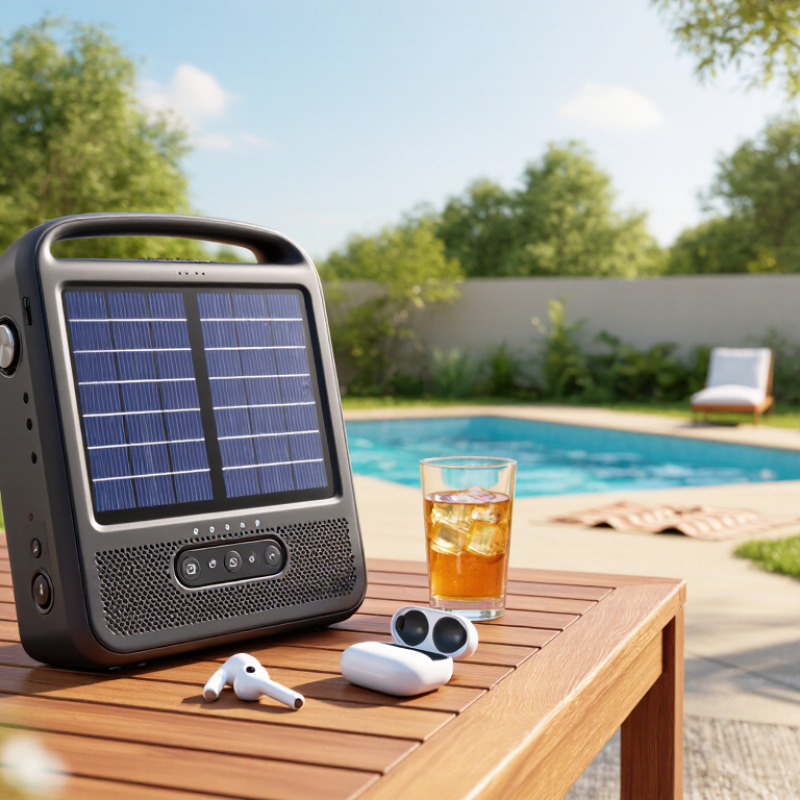
How to Choose Solar Powered Bluetooth Speakers in 2026?

What Are Solar-Powered Bluetooth Speakers and How Do They Work?

Solar-powered Bluetooth speakers combine a photovoltaic panel, rechargeable battery, amplifier, and wireless receiver. Sunlight produces direct-current electricity through the panel. A charge controller then regulates that energy before storing it in the battery. Bluetooth transfers compressed audio from a phone or tablet to the speaker. The battery matters because sunlight changes constantly. Clouds, shade, dust, and poor panel angles reduce charging speed. A speaker may play while charging, but loud audio can consume energy faster than the panel produces it.

Bluetooth SIG’s 2024 Market Update reports 5.4 billion Bluetooth products shipped in 2023. It forecasts nearly 7 billion annual shipments by 2028. This indicates a mature wireless ecosystem, but it does not guarantee efficient solar performance. Fraunhofer ISE’s Photovoltaics Report 2024 notes that commercial solar modules commonly exceed 20% efficiency under standard test conditions. Small speaker panels usually perform below those laboratory results. That gap is easy to overlook.

When choosing a 2026 model, check battery capacity in watt-hours and panel output in watts. A 10-watt-hour battery paired with a 2-watt panel needs five peak-sun hours theoretically. Real charging may require seven to ten hours after conversion losses, heat, and changing sunlight. IP protection, battery replacement options, and a wired charging port also deserve attention. I would not trust a large solar panel label alone. Measure charging time in real outdoor conditions. That is less exciting, but more honest.

Which Solar Charging Features Matter in 2026?

How to Choose Solar Powered Bluetooth Speakers in 2026?

Which Solar Charging Features Matter in 2026?

Solar charging should be judged by usable energy, not panel size. The IEA PVPS Trends 2024 report recorded 447 GW of new photovoltaic capacity worldwide in 2023. Yet household devices still receive much less sunlight than laboratory panels. Standard ratings use 1,000 W/m² irradiance and a 25°C cell temperature. A speaker advertised with a 5-watt panel may produce far less under clouds, dust, or tree shade.

Look for a panel with a clear wattage rating and a built-in maximum power point tracking controller. MPPT can adjust the electrical load as sunlight changes. This matters during late afternoons or partly cloudy weather. NREL’s PVWatts documentation also shows that temperature, orientation, and local solar resource strongly affect output. A front-facing panel is convenient, but it may charge slowly when the speaker sits upright. A foldable or tilting panel could work better outdoors.

Battery transparency matters too. Choose products listing watt-hours, not only milliamp-hours. A charge indicator should show solar input, battery level, and charging faults. USB-C backup charging is still important. Solar alone is unreliable.

I remain cautious.

The Bluetooth SIG’s 2024 Market Update projects annual Bluetooth device shipments to reach 7.5 billion by 2028, increasing the need for efficient standby modes. In practice, automatic sleep settings may save more energy than a decorative solar strip. Check IP protection, replaceable cables, and real charging tests from independent reviewers. Manufacturers often report perfect sunlight; your balcony probably will not.

How to Evaluate Sound Quality, Bluetooth, and Smart Functions

When evaluating solar-powered Bluetooth speakers, test sound outdoors, not only in a quiet room. Place the speaker three meters away and play vocals, acoustic music, and steady bass. Clear speech should remain understandable beside light wind or traffic. Bass should feel controlled, not like a loose vibration inside the cabinet.

Small speakers often exaggerate low frequencies. That can sound exciting for five minutes. My listening notes are imperfect, so I repeat each test at different volume levels.

Bluetooth performance deserves a practical check. Pair the speaker from several rooms away, then walk behind a wall or metal shelf. A newer Bluetooth version may improve efficiency, but it does not guarantee better sound.

Confirm stable reconnection after switching the speaker off. Multipoint pairing is useful when two people share music, although it can create confusing interruptions.

Check latency with video before buying. A noticeable delay makes spoken content feel strangely disconnected.

Smart functions should solve real problems. Physical buttons are valuable when your hands are wet or dusty. Voice controls may be convenient, but examine microphone sensitivity and privacy settings carefully.

Solar charging also needs realistic expectations. Direct midday sunlight can support playback, while shade may provide very little energy. Compare the stated battery capacity with your expected daily use.

A speaker that lasts through an evening is more useful than one with impressive features but slow charging. I would record connection drops, charging time, and outdoor volume in a simple notebook before making the final choice.

How to Check Battery Life, Durability, and Weather Resistance

How to Choose Solar Powered Bluetooth Speakers in 2026?

Battery life begins with realistic testing, not the number printed on the box. Measure playback at 50% volume, with solar charging disabled. Record the result after a full charge. The U.S. Department of Energy’s Energy Storage Grand Challenge Roadmap notes that temperature, charging habits, and cycling strongly affect lithium-ion performance. Heat matters. A speaker claiming 20 hours may deliver less outdoors at high volume. Check whether the manufacturer states capacity in watt-hours, not only estimated hours. That detail makes comparisons more reliable.

Durability depends on construction and repeated handling. Look for sealed buttons, protected charging ports, and a grille that resists dents. IEC 60529 defines IPX7 as protection during temporary immersion up to one meter for 30 minutes. However, certification does not guarantee survival after drops, sand exposure, or saltwater contact. The 2024 Volta Foundation Battery Report identifies heat and operating stress as important contributors to battery aging. Keep the speaker shaded while charging. I would also inspect the hinge and rubber seals after several weeks, because early testing can look unfairly optimistic.

Solar panels usually extend listening time rather than replace charging. Weather changes quickly. Cloud cover, low sun, and dusty panels reduce energy collection. Check independent reports, warranty terms, and charging data from controlled tests. I once trusted an IP rating too much; the speaker survived rain but failed after grit entered the port. That mistake is worth remembering. A practical choice should survive ordinary neglect, not just a laboratory demonstration.

How to Choose Solar-Powered Bluetooth Speakers in 2026

Check battery life, durability, and weather resistance before buying. The chart below uses the water-protection levels defined by IEC 60529, where the second digit indicates resistance to water ingress.

Buying checklist: Prefer a speaker with a manufacturer-rated playback time that covers your expected use, and compare battery capacity and charging time under the same test conditions. For outdoor use, IPX5 protects against water jets, while IPX7 allows temporary immersion in up to 1 metre of water for up to 30 minutes. Also check the enclosure, grille, buttons, charging port cover, drop-test information, and whether the solar panel is intended for emergency top-ups rather than continuous full-power charging.

How to Compare Models and Choose the Right Speaker for Your Needs

Choosing solar-powered Bluetooth speakers in 2026 requires more than comparing battery size and advertised wattage. Compare models by measuring useful performance in realistic conditions. A speaker may sound powerful indoors but lose clarity beside wind, water, or traffic. Listen at low and high volume. Check whether vocals remain clear.

Solar charging deserves careful attention. Small panels often extend playtime rather than fully recharge the battery. Test charging under direct sunlight, light cloud, and partial shade. Record the battery level after several hours. Manufacturer estimates can feel optimistic. I have found that panel position matters more than expected. A speaker with a tilting panel may collect more energy than a larger flat panel.

Durability and daily handling should guide your choice. Check the published water-resistance rating, sealed ports, grille strength, and button response with wet fingers. Compare weight if you plan to carry it hiking or place it on a small balcony. Bluetooth range matters too. Walls, trees, and nearby wireless devices can reduce stability. Look for simple pairing, reliable reconnection, and a battery indicator that is easy to read. Some models sound balanced but charge slowly. Others recharge well but feel harsh at higher volume. That trade-off is easy to overlook. Choose according to your routine, not the most impressive specification.

FAQS

How should I test outdoor sound quality?

Place the speaker about three meters away. Play vocals, acoustic music, and steady bass. Speech should remain clear near light wind or traffic. Bass should feel controlled, not loose or hollow. Repeat the test at different volumes.

Does a newer Bluetooth version guarantee better sound?

No. It may improve efficiency or connection stability, but sound quality depends on the speaker itself. Test pairing from another room. Walk behind a wall or metal shelf. My listening notes can be imperfect, so repeated checks help.

What Bluetooth features are worth checking?

Test automatic reconnection after switching the speaker off. Multipoint pairing helps two listeners share music. However, it may cause sudden interruptions. Check video playback for delay. Noticeable latency can make speech feel strangely disconnected.

Which smart functions are genuinely useful?

Physical buttons help when your hands are wet or dusty. Voice controls may save time. Check microphone sensitivity and privacy settings carefully. Fancy features are not always useful.

How can I measure realistic battery life?

Fully charge the speaker first. Disable solar charging. Play music at 50% volume and record the running time. Heat, charging habits, and repeated cycles reduce battery performance. Printed estimates may look optimistic.

What does solar charging realistically provide?

Direct midday sunlight may support playback. Shade and clouds can provide very little energy. Dusty panels also collect less power. Solar charging usually extends listening time rather than replacing regular charging.

What durability details should I inspect?

Look for sealed buttons and protected charging ports. Check whether the grille resists dents. Inspect rubber seals and hinges after several weeks. Early testing can look too optimistic. Ordinary handling matters.

Does water resistance guarantee complete protection?

No. A temporary-immersion rating does not guarantee survival after drops, sand, or saltwater contact. Keep the charging port clean and dry. I once trusted a rating too much. Grit later caused trouble.

Conclusion

Choosing Solar-Powered Bluetooth Speakers in 2026 requires more than simply selecting a model with a built-in solar panel. These speakers use sunlight to extend battery life while connecting wirelessly to phones, tablets, and other devices. When comparing options, consider solar charging speed, panel efficiency, charging performance in cloudy conditions, USB backup charging, and clear battery-level indicators. A strong choice should also provide balanced sound, stable Bluetooth connectivity, low-latency playback, and useful smart functions such as hands-free calling or simple voice controls.

Battery capacity and everyday reliability are equally important. Look for a speaker that can play for many hours, recharge efficiently, and continue working after exposure to dust, splashes, heat, or changing outdoor conditions. Build quality, portability, control design, and warranty support can also affect long-term value. Finally, compare models according to your main use: travel, camping, home entertainment, poolside listening, or emergency backup power. The best speaker is the one that offers a practical balance of sound quality, charging convenience, durability, features, and price.

Ethan

Ethan

Ethan is a dedicated marketing professional with a deep understanding of the company’s products, services, and customer needs. With a strong background in market research, content strategy, and professional communication, he helps transform complex product information into clear, practical, and......