

0%

Portable Activity Speakers can turn a quiet picnic, backyard workout, or beach gathering into a shared listening space. Choosing one is less simple than checking its size or advertised volume. A speaker that sounds lively in a shop may feel thin outdoors, where open air disperses sound quickly. Small details matter.

Start with how and where you will use it. For a day hike, weight, a secure strap, and dependable battery life may matter more than deep bass. For poolside use, check the maker’s stated water-resistance rating and care instructions; “water resistant” does not mean indestructible. At a group workout, clear vocals and easy controls can be more useful than maximum loudness. Try the buttons with damp hands, if that reflects your routine. It is an easy test to overlook.

Compare real-world battery expectations, charging options, Bluetooth stability, and whether the speaker can pair with another unit. Read reviews that describe specific settings, not just star ratings. Look for repeated comments about distortion, connection drops, or battery decline over time. None is perfect. Sound preference is personal, and published specifications cannot fully predict how a speaker will feel in your own setting. A practical shortlist should balance portability, durability, sound, and price. The best Portable Activity Speakers are not necessarily the loudest; they are the ones you will carry, trust, and enjoy using. I would still leave room for compromise. Your favorite model may have one frustrating flaw.
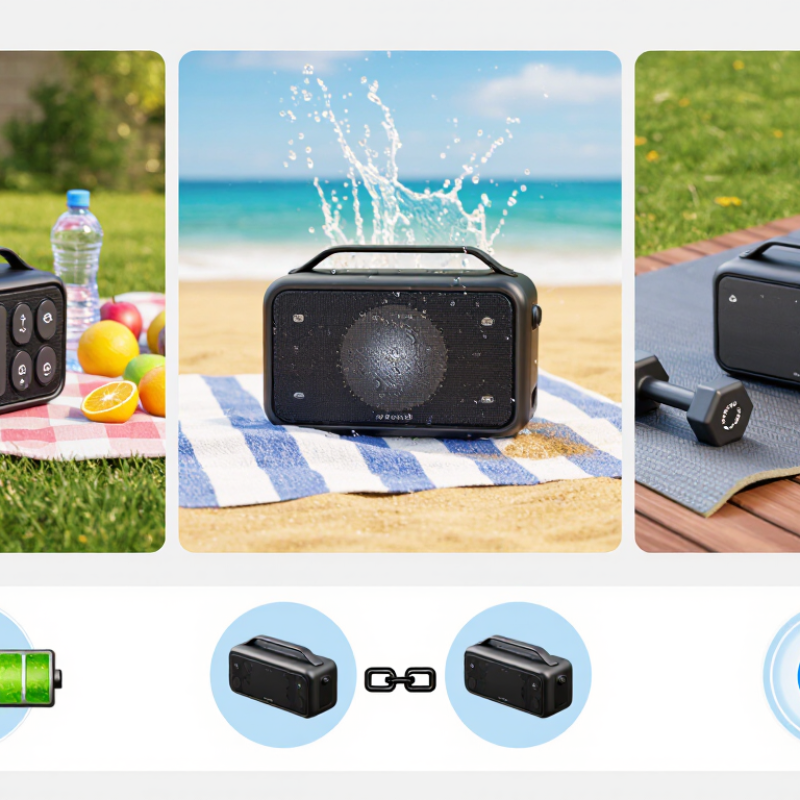
How to Choose the Best Portable Activity Speakers?

Identify the Activities and Environments You Need a Speaker For

Choosing a portable activity speaker starts with the place, not the feature list. A picnic in a quiet park needs clear voices at modest volume; a windy beach demands stronger projection and protection from sand and splashes. For camping, check battery life against your longest outing, not the advertised best-case figure. A speaker marked IPX7 is tested for temporary immersion under IEC 60529, but that does not make it sandproof. Small distinction. Easy to miss.

The Outdoor Foundation’s 2024 Outdoor Participation Trends Report says 175.8 million Americans, or 57.3% of people aged six and older, took part in outdoor recreation in 2023. That range of activities calls for different trade-offs. For a backyard gathering, simple controls and even sound coverage may matter more than a tiny, ultra-light body. On a hike, weight and dependable playback matter; on a boat, secure handling and water resistance move up the list.

Think about who will listen, too: a small group around a picnic table has different needs from people spread across a campsite. It is easy to overestimate how loud a speaker must be. Wind, distance, and background noise all change the answer, so consider where it will sit before judging its power.

Compare Speaker Size, Weight, Battery Life, and Power Options

Start with the activity, not the loudest specification. A speaker for a picnic blanket can be larger than one clipped to a daypack. Check its dimensions beside your water bottle, then consider where it will sit during use. A compact body saves space, but tiny controls can be awkward with cold or damp hands. Small details matter.

Weight becomes obvious on longer walks. Compare the speaker’s listed weight with the gear you already carry, including its strap or protective case. If it stays in a car or backyard, a heavier cabinet may be acceptable and can offer fuller sound. For cycling or hiking, a lighter model is easier to secure. Check whether its attachment point feels stable before setting off.

Treat battery life as an estimate, not a promise. Manufacturers often measure playback at moderate volume, while outdoor noise encourages louder listening. Look for stated test conditions, and leave a buffer for a long afternoon. A ten-hour rating may not mean ten hours at high volume. Check charging time, cable type, and whether the speaker can run while plugged in. USB charging is convenient; a replaceable battery or power-bank input can help on longer trips. I would still plan a backup.

Evaluate Sound Quality, Volume, and Audio Features

When comparing portable activity speakers, listen for clear vocals, controlled bass, and balanced sound at both low and high volume. A deep bass note should feel full, not rattle the cabinet or bury speech. Check test measurements for frequency response and distortion, ideally taken at a stated distance and volume. Wattage alone is a weak shortcut: it does not show how loud or clean a speaker sounds outdoors. Try a familiar track near a fan or traffic, then listen again in a quiet room. Small speakers can surprise you.

Volume needs context. NIOSH’s occupational noise guidance sets an exposure limit of 85 dBA for eight hours, with allowable time halved for every 3 dB increase. This is a workplace guideline, not a consumer target, but it shows why sustained high output matters. If possible, check sound pressure at your actual listening spot with a meter, not beside the speaker. Look for an equalizer, clear battery and connection indicators, and a limiter or volume controls that are easy to reach. Bluetooth codecs may help, but placement and tuning often matter more. I still find advertised “360-degree” sound hard to judge from specs alone. Test it with people standing around the speaker, not just directly in front.

Check Durability, Weather Resistance, and Connectivity

Portable activity speakers meet dust, drops, wet grass, and sudden showers. Choose a model with a clearly stated protection rating, not vague “outdoor-ready” wording. The IEC 60529 standard defines enclosure protection: an IPX7 rating, for example, indicates testing in water up to one metre deep for 30 minutes. It does not confirm dust protection or resistance to repeated impacts. Small details matter.

Check the speaker’s casing, covered ports, grille, and controls. A rubberized edge can soften everyday bumps, while a loose charging-port cover may let grit or water inside. Look for published drop-test details and a practical warranty. I would not assume a higher water rating means a tougher speaker overall. Ratings describe specific tests, not every muddy trail or poolside accident.

Connectivity matters when a group shares music outdoors. Bluetooth SIG’s 2024 Market Update forecasts 5.4 billion Bluetooth device shipments annually by 2028, reflecting how widely the technology is used. Still, test pairing range in an open area and check whether the speaker reconnects reliably after moving out of range. Multi-device pairing can help, but menus may be fiddly with wet hands. Test it outdoors. A long battery estimate is useful, though volume and temperature can shorten real-world playtime.

Compare Models Against Your Budget and Practical Needs

A sensible budget starts with the activity, not the loudest specification. For a picnic or small fitness class, clear sound at moderate volume may matter more than deep bass. Check the speaker’s weight, handle, and battery life; a heavy model can feel inconvenient after a long walk. Short outings need less battery than all-day events. Keep some margin, though. Advertised battery life often assumes moderate volume and ideal conditions.

Compare prices against features you will actually use. A higher-priced speaker may offer stronger weather resistance, simpler controls, or a replaceable battery. Those details can be worth paying for if the speaker will travel outdoors every week. For occasional indoor use, they may not be. Check the protection rating and warranty terms rather than relying on vague claims like “outdoor ready.” Test the buttons, too. Small controls can be awkward with sweaty hands.

If possible, listen at the distance you expect to use it, not right beside the speaker. Notice whether voices stay clear when music plays, and whether the sound becomes harsh near maximum volume. Bring your usual phone and check how quickly it connects. I might overvalue loudness when comparing models; in practice, easy carrying and reliable playback can matter more. And needs change. A budget choice that fits today may feel limiting if your group or activity grows.

FAQS

How should I choose a speaker size for outdoor activities?

Match its size to your activity. A picnic speaker can be larger than one clipped to a daypack. Check whether it fits beside your water bottle.

Does a lighter speaker always work better for hiking?

Not always. A lighter model is easier to carry and secure, but check that its attachment point feels stable. A heavier speaker may suit a backyard better.

Can I rely on the advertised battery life?

Treat it as an estimate. Loud playback and cold weather can reduce playtime. Leave a buffer for a long afternoon.

What power details should I check before a trip?

Check charging time, cable type, and whether the speaker works while plugged in. A power bank or replaceable battery may help. I would still pack a backup.

What does an IPX7 rating tell me?

It indicates testing in water up to one metre deep for 30 minutes. It does not confirm dust protection or resistance to repeated drops.

Which physical details can help protect a speaker?

Look for covered ports, a sturdy grille, and rubberized edges. Check that the charging-port cover closes firmly. Small details matter.

How can I check wireless connection performance outdoors?

Test the pairing range in an open area, then see whether it reconnects reliably. Test it outdoors.

Is multi-device pairing always convenient?

It can help when a group shares music, but menus may be fiddly with wet hands. I would check the controls before relying on it.

Conclusion

Choosing the right Portable Activity Speakers starts with understanding where and how they will be used. Consider the activities you enjoy and the environments you visit, such as indoor gatherings, outdoor workouts, or day trips. These settings help determine the speaker’s ideal size, weight, battery life, and power options. A lightweight model may be easier to carry, while longer battery life can be important when charging opportunities are limited.

Next, compare sound quality and volume, along with useful audio features and connectivity options. Check whether the speaker is durable enough for regular travel and offers suitable resistance to dust, splashes, or changing weather. Finally, weigh these qualities against your budget and practical needs. The best choice is not necessarily the largest or most powerful one, but the speaker that offers a comfortable balance of portability, dependable performance, durability, and value for the activities you actually plan to enjoy.

Ethan

Ethan

Ethan is a dedicated marketing professional with a deep understanding of the company’s products, services, and customer needs. With a strong background in market research, content strategy, and professional communication, he helps transform complex product information into clear, practical, and......