

Why Choose Wired In-Ear Earbuds for Global Sourcing?
Global buyers are reexamining Wired In-Ear Earbuds as wireless products become more complex. A wired model needs no charging case, battery replacement, or Bluetooth pairing. That simplicity can reduce product complaints and after-sales pressure. It also supports consistent audio during long listening sessions, whether users work at a desk, travel by train, or monitor equipment in a warehouse.
Brent Butterworth, an experienced headphone reviewer and measurement specialist, often uses this practical principle: “Trust your ears, but verify with measurements.” His view suits sourcing decisions. Buyers should examine frequency-response charts, microphone performance, cable flexibility, plug quality, and sample consistency. A factory may present polished packaging, yet the cable can feel stiff after repeated bending. Small details matter.
Reliability is not automatic.
Wired In-Ear Earbuds can provide stable sound without wireless interference. They can also simplify inventory management across different markets. However, a universal model may not fit every customer. Ear-tip sizes, connector standards, strain relief, and regional packaging requirements still require careful review. Global sourcing teams should request pre-production samples and test them under realistic conditions. Try calls in a noisy office. Bend the cable repeatedly. Check whether the plug loosens after daily use.
There is no perfect specification. A low-cost design may win on price but lose on comfort. A premium cable may improve durability but reduce margin. This tension deserves honest evaluation. The strongest sourcing strategy combines measurable performance, hands-on testing, supplier transparency, and feedback from real users.
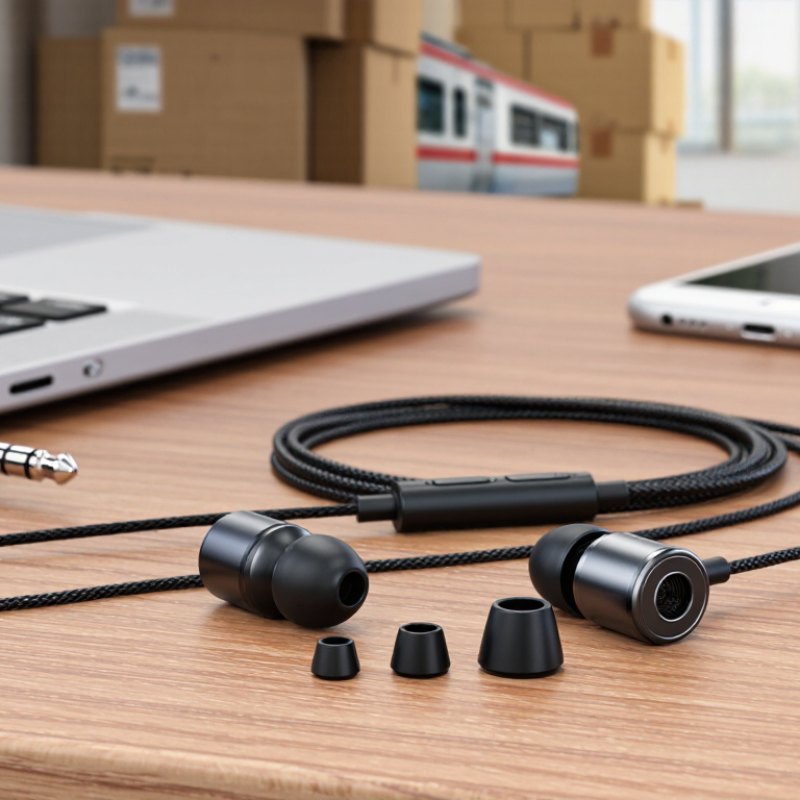
Wired in-ear earbuds are compact audio devices that deliver sound through small drivers placed inside the ear canal. A cable connects each earpiece to a plug, USB connector, or compatible audio source. Their core features include sealed ear tips, lightweight housings, audio drivers, and sometimes an inline microphone. Different ear tip sizes help users adjust comfort and sound isolation.
From a sourcing perspective, the cable is both useful and important. It provides a stable connection without battery charging, which suits offices, classrooms, travel kits, and communication equipment. During product evaluations, buyers should check connector quality, cable flexibility, strain relief, and microphone clarity. A firm strain relief can reduce damage near the plug. Small details matter.
Ear tip material also affects comfort and passive noise reduction. Silicone tips are common, while foam options may provide a closer fit. However, a tighter seal is not automatically better for every user. I have found that comfort can change after extended wear. Earbuds may feel fine for ten minutes but become uncomfortable later. Suppliers should provide frequency response data, impedance, sensitivity, sample units, and inspection records. Buyers can then compare real listening results with technical claims. Wired models are not flawless. Cables can tangle, plugs can wear, and low-quality housings may crack under repeated use. Clear specifications and practical testing remain essential.
Wired in-ear earbuds transmit audio through a physical cable and typically use passive drivers, allowing a compact design without a built-in battery. The chart shows commonly used approximate frequency bands across the audible range, a core specification when evaluating wired in-ear earbud performance.
Frequency response specifications are commonly stated from 20 Hz to 20 kHz, while actual performance depends on the driver, acoustic tuning, ear-tip seal, cable connection, and source device. Wired models also offer consistent signal delivery and do not require charging during use.
Wired in-ear earbuds remain practical for global sourcing because sound, connectivity, and power performance are easier to control. A passive analog design avoids Bluetooth pairing delays, wireless interference, and software compatibility issues. It also delivers stable channel transmission during calls, commuting, and factory-floor testing. The Bluetooth SIG 2024 Market Update forecasts annual Bluetooth device shipments will rise from about 5 billion in 2023 to 7 billion by 2028. That growth is impressive, but wireless demand does not remove the need for dependable wired options.
Sound quality requires measurable checks, not attractive packaging. Suppliers should provide frequency-response curves, impedance, sensitivity, channel balance, and distortion results. A listening panel can then test vocals, bass texture, and harshness at moderate volume. The WHO-ITU Global Standard for Safe Listening Devices and Systems recommends limiting adults to 80 dB for 40 hours weekly. Fit matters too. A loose ear tip can weaken bass and encourage unsafe volume increases.
Power performance is another sourcing advantage. Traditional wired earbuds need no rechargeable battery, charging case, or battery replacement process. That reduces maintenance concerns and simplifies long-term storage. USB-C models need an integrated digital-to-analog converter, so buyers should verify power consumption and device compatibility. Wired is not automatically better. Cables bend, connectors wear, and low-cost assemblies can fail quickly. A useful inspection includes repeated plug insertion, cable flexing, sweat exposure, and microphone testing. Shipment reports show market direction, not daily listening satisfaction. That gap deserves attention.
International purchasing teams often choose wired in-ear earbuds for predictable supply planning. Their design is comparatively simple: drivers, cable, plug, housing, and packaging. There is no battery cell, wireless chipset, or charging case. This reduces component dependencies and simplifies quality inspections. It also avoids battery-related transport procedures in many shipping lanes.
The WTO’s Global Trade Outlook and Statistics 2024 projected merchandise trade growth of 2.6% in 2024 and 3.3% in 2025. Demand may recover, but purchasing teams still face unstable freight schedules and changing order volumes. Wired models can support smaller safety stocks because fewer electronic parts require allocation.
A buyer can also plan mixed cartons more easily when products share similar cable and connector specifications. Small details matter. Connector length and packaging size affect container utilization.
UNCTAD’s Review of Maritime Transport 2024 highlighted continuing disruption risks across major shipping routes. For international buyers, this makes replenishment speed a practical concern. A wired earbud program can use regional assembly, flexible packaging, or alternate cable suppliers. These options improve resilience, although they may create new inspection work.
That trade-off deserves honest review. Lower product complexity does not guarantee perfect consistency. Cable fatigue, plug tolerance, and sound imbalance still require sampling tests before shipment. Procurement teams should compare landed cost, defect rates, lead time, and compliance documents rather than focusing only on unit price.
Wired in-ear earbuds remain practical for buyers who value stable audio and simple operation. Material selection shapes comfort, durability, and production consistency. Medical-grade silicone may feel soft, but its hardness must match the ear tip design. TPE offers flexibility, while PVC can reduce costs but may feel less refined. Oxygen-free copper conductors support reliable signal transmission when protected by suitable insulation. The outer jacket also needs resistance to bending, sweat, and everyday friction.
Manufacturing control matters just as much. A capable factory should monitor wire stripping, solder temperature, connector assembly, and strain-relief molding. Small errors can create intermittent sound. We recommend checking pilot samples before approving mass production. Pull tests, repeated bending tests, and plug insertion tests reveal weaknesses that visual inspection misses. Testing should also cover impedance, channel balance, frequency response, microphone performance, and cable noise. Real use is rarely as clean as a laboratory.
Quality documents add credibility, but paperwork alone is not proof. Buyers should review ISO 9001 processes, material declarations, and applicable safety requirements such as RoHS and REACH. Sampling plans should define acceptable defect levels and inspection stages. One overlooked issue is batch variation. A first sample may perform well, while later units show uneven molding or different cable stiffness. That risk deserves honest discussion. Specifications may need revision after user trials, especially when comfort and long-term durability conflict. Better sourcing leaves room for measured improvement.
Why Choose Wired In-Ear Earbuds for Global Sourcing?
Wired in-ear earbuds remain practical for global sourcing because they avoid batteries, charging circuits, and wireless pairing issues. Their unit cost can be lower, but the cheapest quote rarely shows the full expense. Buyers should compare the earbud price, cable length, packaging, tooling, freight, inspection, and replacement rates. A small difference in connector cost may become significant across 10,000 units. Request a clear quotation with material grades and production assumptions.
Compatibility needs careful testing. Confirm connector type, plug dimensions, microphone wiring, impedance, sensitivity, and device performance. A product may work on one phone but produce weak sound on another device. Test samples with several operating systems, laptops, tablets, and audio ports. I have seen samples pass basic listening tests, then fail during repeated cable bending. That mistake is avoidable, though not always obvious.
Tips: Ask suppliers for pre-production samples, recent test records, and a written quality checklist. Check their factory capacity, response speed, defect handling, and experience with export packaging. Compare at least three suppliers using the same specification sheet. Do not rely on polished photos. Visit or commission an independent inspection when order value justifies it. Also review the supplier’s minimum order quantity and lead-time promises. A flexible supplier may cost slightly more, yet reduce delays and rework. That trade-off deserves honest review.
They are compact audio devices with small drivers inside the ear canal. A cable connects them to an audio source. Silicone or foam tips help create a seal. Some models include an inline microphone.
They need no rechargeable battery, charging case, or pairing process. Connection remains stable in offices, classrooms, travel kits, and communication equipment. Their simpler construction can reduce component dependencies. Simpler does not mean failure-proof.
Request frequency-response curves, impedance, sensitivity, channel balance, and distortion results. Use sample units for listening tests. Check vocals, bass texture, and harshness at moderate volume. Packaging cannot prove sound quality.
Different tip sizes change comfort, bass response, and passive noise reduction. A loose tip may weaken bass. Users might raise volume unnecessarily. A tight seal is not comfortable for everyone. Test wear beyond ten minutes.
Keep listening at moderate volume. One practical guideline limits adults to 80 decibels for 40 hours weekly. Shorter sessions may be wiser in noisy places. Hearing comfort varies. The guideline is not personal medical advice.
Traditional analog models draw power from the connected device. They do not need charging or battery replacement. USB-C models may include digital conversion hardware. Verify power use and device compatibility before ordering.
Inspect connector fit, cable flexibility, strain relief, housing strength, and microphone clarity. Repeat plug insertion and cable flexing. Add sweat exposure and channel-balance checks. These tests are imperfect, but they reveal weak assemblies.
Compare landed cost, defect rates, lead time, packaging size, and compliance documents. Similar cable specifications can simplify mixed cartons. Regional assembly and alternate suppliers may improve resilience. They also create extra inspection work. That trade-off needs review.
Wired In-Ear Earbuds are compact audio devices that deliver sound through a physical connection, offering stable transmission, low latency, and dependable performance without relying on built-in wireless batteries. Their in-ear design can provide effective noise isolation, while suitable drivers, cable construction, and connector quality influence clarity, bass response, durability, and user comfort. For international purchasing, these features support predictable product planning, broad device compatibility, and consistent availability across different markets.
Successful sourcing requires careful evaluation of materials, manufacturing processes, inspection procedures, and applicable quality standards. Buyers should review cable strength, earbud housing, connector reliability, packaging, and production consistency, while also comparing unit cost, minimum order quantities, lead times, customization options, and compatibility requirements. A qualified supplier should demonstrate stable capacity, transparent communication, effective quality control, and the ability to meet agreed specifications. By balancing sound performance, power-free operation, cost efficiency, and supply reliability, purchasers can select products that support long-term distribution and customer satisfaction.