Executive Sourcing & Industry Overview
An authoritative technical guide compiled by senior acoustic engineers and supply chain strategists. Discover key manufacturing benchmarks, hardware innovation roadmaps, and certified export protocols across China's leading pro audio production hubs.
Key Market Trend (2025–2030): China's karaoke speaker manufacturing industry has transitioned from basic acoustic assemblies to high-precision, DSP-driven intelligent sound systems. Global procurement directors are prioritizing suppliers offering active noise suppression, sub-15ms wireless microphone sync, high-density LiFePO4 power architectures, and ISO/BSCI audited turnkey OEM packaging.
Featured Commercial Audio & Karaoke Speaker Systems
High-demand models engineered for global wholesale, OEM branding, and international distributor fulfillment.
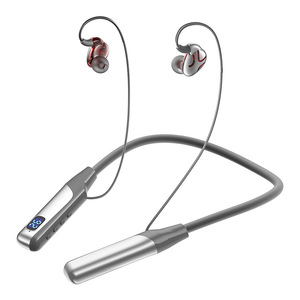
Neckband Wireless Sports Audio System
Bluetooth 5.3 chip, extended battery standby, dual-mic ENC noise cancellation, ergonomic silicone neck-fit for personal audio monitoring.
Inquire Now
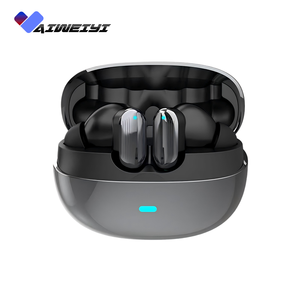
MZ76 TWS Heavy-Bass Audio Earbuds
IPX5 water resistance, custom logo OEM support, ultra-low latency acoustic diaphragm, HD microphone for seamless voice input.
Inquire Now
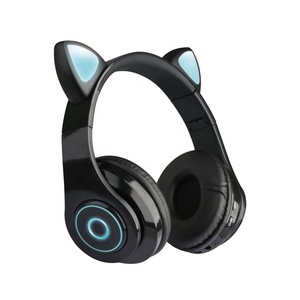
2026 RGB ANC Active Noise Headset
Active Noise Cancellation (ANC), dynamic RGB light synchronization, IPX4 splash resistance, Hi-Fi tuned dynamic driver.
Inquire Now
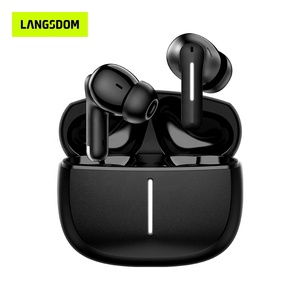
Pro Gaming & Sport ANC TWS System
JL chipset, deep bass acoustic response, custom corporate branding options, ultra-low gaming latency protocol.
Inquire Now
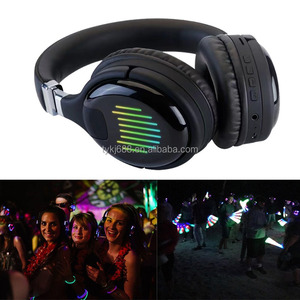
Long-Range RF LED Party Headset Set
Multi-channel RF transmitter bundle, 500-meter line-of-sight range, synchronized LED flashing light modes, rechargeable Li-ion core.
Inquire Now
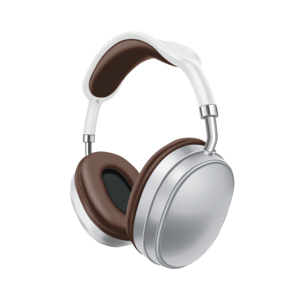
Premium Over-Ear ANC Travel Headphones
JL 5.3 chipset architecture, passive memory foam sound isolation, active low-frequency engine hum cancellation, extended flight battery reserve.
Inquire Now
Hi-Fi Voice Call Noise Cancelling Earphones
Enhanced voice pickup microphone array, tuned flat frequency response curves, lightweight intra-aural acoustic fit for extended listening sessions.
Inquire Now
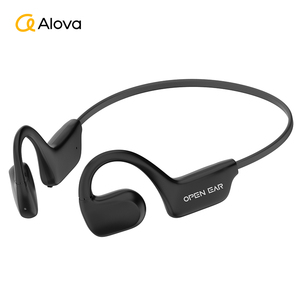
ALOVA Open-Ear Air Conduction Headset
Bluetooth 5.2 open-ear acoustic system, IPX5 outdoor protection, directional sound wave projection, maximum spatial situational awareness.
Inquire Now
60+
Global Export Markets
100%
HATS Acoustic Verified
<15ms
Wireless Mic Latency
ISO9001
Certified OEM Facilities
1. China's Karaoke Speaker & Pro Audio Manufacturing Industrial Ecosystem
The global demand for portable karaoke speakers, trolley audio systems, and high-fidelity party boxes has experienced exponential growth. Driven by advances in consumer entertainment, outdoor leisure, and commercial venue expansion, B2B buyers continuously seek reliable China top karaoke speakers factories and exporters capable of delivering superior acoustic performance at competitive price points. China manufactures over 80% of the world's commercial loudspeaker assemblies, with major industrial clusters located in Guangdong Province—specifically Shenzhen, Dongguan, Enping, and Guangzhou.
Understanding the regional specializations of China's pro audio export hubs is essential for international supply chain managers seeking optimized sourcing strategies:
Shenzhen & Dongguan Cluster
Specializes in high-density SMT (Surface Mount Technology), Bluetooth 5.3/6.0 SoC integration, digital signal processing (DSP) algorithms, solar charging laminations, and advanced capacitive touch interfaces.
Enping Audio City
The global capital for wireless microphone systems, UHF phase-locked loop (PLL) synthesizers, dual-channel anti-feedback receivers, and analog-to-digital vocal processing hardware.
Guangzhou Panyu District
Focuses on wooden cabinet CNC routing, high-SPL passive radiators, Class-D amplifier module design, and large-format outdoor party trolley speaker assembly lines.
Component & Architecture Comparison for Export Sourcing
| System Tier |
DSP & Amplifier Core |
Microphone RF Specs |
Cabinet Material |
Compliance Standards |
| Entry-Level Portable |
Single-chip JL / Actions Class-D (15W–30W) |
VHF Fixed Frequency (220–270 MHz) |
Injected ABS Plastic with Mesh |
CE, RoHS, FCC Part 15 |
| Mid-Tier Party Box |
Dual DSP + Realtek / BP Class-D (50W–120W) |
UHF Adjustable (600–690 MHz) |
High-Impact ABS + Passive Radiators |
CE, FCC, REACH, MSDS, UN38.3 |
| Pro B2B Flagship |
Quad DSP engine + Class-D (200W–500W SPL) |
UHF PLL Diversity (<10ms delay) |
15mm Reinforced MDF Wood + Polyurea |
ISO9001, BSCI, CE-RED, FCC ID, Telec |
2. Future Sourcing & Procurement Trends in Karaoke Audio (2025–2030)
To maintain market share in direct-to-consumer and B2B distribution channels, buyers must align product specifications with emerging technological trends. Importers working with top Chinese audio exporters should incorporate the following advancements into their product development roadmaps:
A. AI-Driven Real-Time Vocal Cancellation & Pitch Assist
Modern end-users no longer tolerate dedicated "karaoke track" restrictions. Next-generation DSP microprocessors embed deep-learning neural algorithms capable of isolating and suppressing lead vocals from standard streaming media (Spotify, YouTube, Apple Music) in real time while preserving original stereo instrumentation.
B. High-Efficiency Solar & LiFePO4 Battery Integration
In alignment with Nordic and European environmental directives, forward-thinking manufacturers are lamination-integrating flexible solar cells (such as Powerfoyle technology) onto speaker tops for continuous outdoor trickling charges. Furthermore, traditional Lithium Cobalt chemistry is rapidly being replaced by safe, long-lifecycle LiFePO4 cells rated for 3,000+ charge cycles.
C. Auracast™ & TWS Multi-Speaker Broadcast
Bluetooth LE Audio and Auracast™ protocols allow a single master karaoke console or phone source to transmit synchronized, uncompressed audio streams to dozens of localized satellite party speakers simultaneously without radio frequency interference or latency drift.
D. Dynamic RGB Lightshow Matrix with Sound Sync
Visual impact directly drives retail sales. Modern party speakers incorporate front-panel ring LED arrays and side strobe lights controlled by dedicated light-driver microcontrollers that beat-match spectral frequency shifts in real time.
3. Acoustic Engineering & Factory Quality Verification Guidelines
Evaluating a OEM/ODM supplier in China requires rigorous technical audit criteria beyond basic price negotiation. Highly authoritative manufacturers maintain strict quality assurance protocols to guarantee batch-to-batch consistency and prevent common failure modes such as voice-coil overheating, cabinet rattle, or wireless mic dropouts.
Engineering Reality Check: Low-cost suppliers often inflate peak power ratings (e.g., standard marketing claims of "5000W PMPO"). Professional B2B buyers must insist on verified RMS (Root Mean Square) continuous power metrics measured under THD (Total Harmonic Distortion) < 1% at 1 kHz over a sustained 8-hour burn-in period.
Essential OEM/ODM Testing Checklist for Sourcing Directors:
- HATS (Head and Torso Simulator) Acoustic Profiling: Verification of frequency response curves (50 Hz – 20 kHz) to ensure balanced midrange vocal clarity without acoustic sibilance or boominess.
- RF Spectrum Analysis: Testing wireless microphone signal-to-noise ratio (SNR > 95dB) and harmonic suppression across crowded 2.4GHz and UHF bands.
- Thermal Cycle & Drop Tests: Subjecting finished units to temperature chamber cycles (-20°C to +65°C) and 1.2-meter drop tests onto concrete surfaces to validate ABS structural integrity.
- IP Code Enclosure Sealing Validation: Utilizing specialized rain-chamber and dust-ingress equipment to certify IPX4, IPX5, or IPX7 waterproof ratings for outdoor portable activity speakers.
- Battery Safety Certification: Mandating UN38.3 transport testing, MSDS sheets, IEC 62133 cell standards, and integrated Battery Management System (BMS) overcharge/over-discharge protections.
4. Partnering with Stockholm-Inspired Acoustic R&D Facilities
Rooted in Scandinavian design discipline since 2010, our manufacturing infrastructure bridges clean, minimalist industrial aesthetics with high-volume, cost-optimized production execution in China. Distributed across 60+ global markets, our enterprise platform empowers retail chains, electronics brands, and B2B audio distributors to quickly deploy market-ready audio solutions.
Turnkey OEM/ODM Design
From 3D CAD modeling, custom acoustic chamber tuning, and tooling fabrication to bespoke artwork, retail packaging, and customized localized user manuals.
Global Compliance Engineering
Pre-certified product architectures facilitating rapid approval for CE, FCC, RoHS, REACH, Telec, KC, and Prop 65 international market entry.
Flexible Commercial Terms
Scalable Minimum Order Quantities (MOQs), structured SKUs for mixed-container shipments, and dedicated aftermarket spare parts support program.
5. Comprehensive B2B Sourcing & Procurement FAQ
Direct answers to crucial questions frequently raised by international importers, procurement managers, and brand owners.
Q1: What is the standard MOQ (Minimum Order Quantity) for OEM customized karaoke speakers?
+
For fully customized OEM orders involving branded silk-screen printing, customized startup firmware screens, and bespoke gift box packaging, the standard MOQ ranges between 500 to 1,000 units per model. For off-the-shelf neutral inventory requiring only logo placement, MOQs can be accommodated starting at 200 units.
Q2: How do China factories ensure zero audio feedback (howling) during karaoke operation?
+
Professional audio factories utilize dual-stage anti-feedback engineering. First, microcontrollers deploy notch-filtering and frequency-shifting DSP algorithms to detect and attenuate resonant feedback loops in milliseconds. Second, microphone capsules are engineered with super-cardioid polar patterns that reject off-axis acoustic waves emitted directly from the speaker woofer.
Q3: What wireless radio frequency regulations apply when importing karaoke microphones into North America and Europe?
+
In the United States, wireless microphones operating in the UHF spectrum must comply with FCC Part 15 and Part 74 rules (strictly avoiding restricted 600 MHz service band blocks). In the European Union, equipment must comply with the Radio Equipment Directive (RED 2014/53/EU) and operate within designated Harmonized CE bands (such as 863–865 MHz or approved 470–694 MHz spectrums).
Q4: What is the typical production lead time for a full container load (FCL) of party speakers?
+
Initial custom OEM orders require approximately 35 to 45 calendar days following golden sample confirmation and deposit receipt. Subsequent repeat production orders are typically executed within 25 to 30 days. Rapid sample dispatch for prototype testing is completed within 5 to 7 business days.
Q5: How do top exporters handle lithium battery shipping compliance and documentation?
+
All exported audio products containing internal lithium-ion or LiFePO4 batteries are accompanied by certified UN38.3 test reports, 1.2-meter drop test certification, and MSDS (Material Safety Data Sheets). Shipments conform strictly to IATA Dangerous Goods Regulations for air freight and IMO IMDG rules for ocean transport.
Q6: Can your engineering team develop proprietary acoustic tooling under an exclusive ODM agreement?
+
Yes. Our R&D team offers complete non-disclosure agreement (NDA) protected ODM services. We manage industrial design, plastic injection mold creation, tooling ownership agreements, and exclusive geographic distribution rights for proprietary speaker cabinets and earbud designs.
Initiate Your Commercial Audio Sourcing Project
Partner directly with a certified leader among China top karaoke speakers factories & exporters. Contact our commercial B2B engineering team today for technical data sheets, wholesale price schedules, and OEM prototype samples.