

Precision-engineered audio solutions available for OEM custom branding, wholesale procurement, and high-volume international distribution.
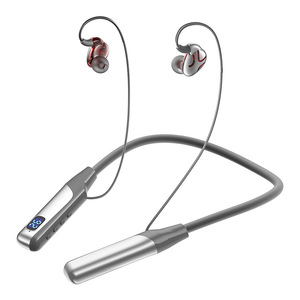
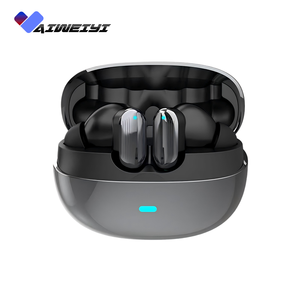
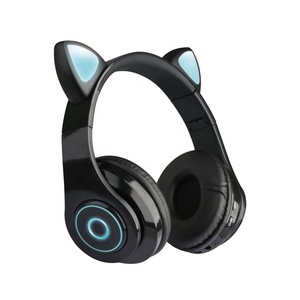
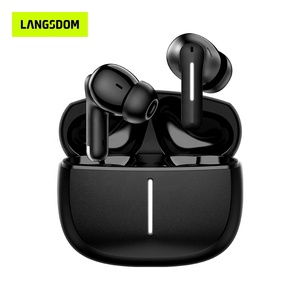
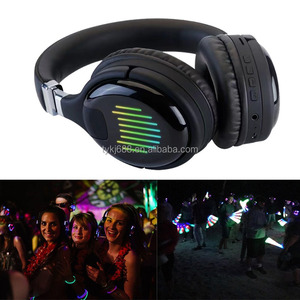
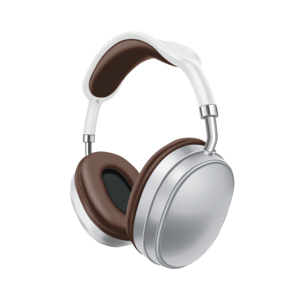
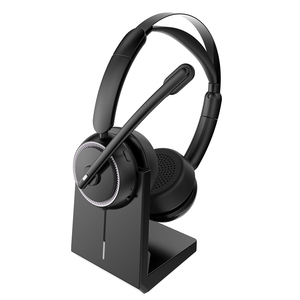
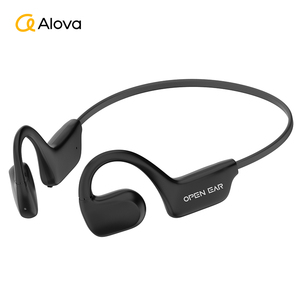
As global consumer demand shifts dynamically toward high-resolution wireless audio, China’s audio manufacturing ecosystem in Guangdong (Shenzhen, Dongguan, and Huizhou) continues to supply over 75% of the world's wireless headphones, earbuds, and wearable acoustics. Driven by aggressive investments in Surface Mount Technology (SMT), automated acoustic precision testing, and localized chipset integration, top-tier Chinese manufacturers have evolved from pure Contract Manufacturers (CM) into full-service Original Design Manufacturers (ODM).
For international buyers, brand owners, and retail distributors across North America, Europe, and the APAC region, identifying reliable OEM/ODM partners requires navigating complex technical parameters: chipset architectures, noise cancellation depth, driver materials, battery safety protocols, and regulatory compliance. This industrial whitepaper breaks down the technical benchmarks, procurement strategies, and technological shifts defining China’s top wireless headphone exporters in 2025 and beyond.
The concentration of raw material suppliers, micro-speaker dynamic driver fabricators, lithium battery cell producers, and tooling shops in Southern China allows for unprecedented prototyping speed and cost optimization:
Rapid tooling turnaround within 15–20 days and component sourcing lead times compressed by 40% compared to alternative global manufacturing hubs.
In-house sound engineering labs equipped with Audio Precision (AP555) analyzers, Anechoic Chambers, and Head & Torso Simulators (HATS).
Complete regulatory readiness including CE, FCC, RoHS 2.0, REACH, KC, Telec, and UN38.3 MSDS battery transport certifications.
When evaluating China wireless headphone suppliers, discerning B2B buyers must analyze three core hardware pillars: System-on-Chip (SoC) integration, Dynamic Driver Material Composition, and Active Noise Cancellation (ANC) Signal Processing.
The SoC dictates connection stability, power efficiency, latency, and codec support (LDAC, aptX Adaptive, AAC, SBC). Premier Chinese exporters select chipsets tailored precisely to market positioning:
| Chipset Platform | Primary Market Tier | Active ANC Type | Latency (Game Mode) | Key Commercial Benefit |
|---|---|---|---|---|
| Qualcomm (QCC305x / QCC517x) | Premium Flagship / Audiophile | Hybrid Adaptive ANC (-45dB) | < 30ms (aptX Low Latency) | Snapdragon Sound, Lossless 24-bit/96kHz, multipoint connection. |
| Realtek (RTL8773 / RTL8763) | Mid-to-High Retail / Enterprise | Feedforward / Feedback ANC (-35dB) | 40ms - 50ms | High energy efficiency, robust dual-mic ENC call algorithms. |
| Jieli (JL697x / JL700x) | Mass Market / High-Volume Promo | Digital ANC (-25dB to -30dB) | 50ms - 70ms | Unbeatable cost-performance ratio, rapid turn-key firmware customization. |
| Airoha (AB1562 / AB1565) | Sports & Open-Ear (OWS) | Hybrid ANC & Spatial Audio | < 40ms | Seamless switching, native spatial audio processing, ultra-low power consumption. |
Acoustic reproduction accuracy depends heavily on dynamic driver diaphragm geometry and voice coil architecture. Premier Chinese exporters utilize specialized driver materials to match target sound signatures:
Procurement teams must align their sourcing roadmaps with emerging technology standards to prevent inventory obsolescence. Top Chinese audio exporters are actively scaling production across five key structural innovation vectors:
Bluetooth Low Energy (LE) Audio featuring the LC3 (Low Complexity Communication Codec) is rapidly replacing legacy SBC. LC3 delivers superior sound quality at half the bit rate, dramatically extending battery life while enabling Multi-Stream Audio and Auracast™ broadcast audio in public venues.
Consumer fatigue with in-ear tips has accelerated the adoption of Open-Wearable Stereo (OWS) headsets. Air conduction tech paired with liquid silicone earhooks provides ambient awareness for sports and office wear without sacrificing low-end bass response.
Following Scandinavian eco-design innovations (such as Powerfoyle solar material integration), leading Shenzhen manufacturers are embedding flexible indoor/outdoor light-charging cells into headphone headbands and outdoor speakers. Light-harvesting tech converts both artificial room light and natural sunlight into continuous trickle charge, drastically extending battery longevity and reducing carbon footprints.
Traditional dual-microphone noise filtering is being superseded by Deep Neural Network (DNN) Environmental Noise Cancellation algorithms running on dedicated NPU processor cores. These algorithms sample millions of noise profiles in real time to isolate human voices during outdoor calls under heavy wind conditions (up to 30 km/h wind noise attenuation).
International environmental regulations (EU Right to Repair, EPR requirements) mandate sustainable manufacturing. Leading Chinese exporters now offer options for Post-Consumer Recycled (PCR) ABS plastic chassis, ocean-bound plastic woven fabrics, and 100% plastic-free biodegradable packaging.
Partnering with China’s premier headphone exporters requires an understanding of their multi-tier Quality Assurance (QA) protocols. Top-tier manufacturers operate under strict ISO 9001 and BSCI auditing frameworks, enforcing a 5-step quality verification system prior to shipping:
100% inspection of battery cells (capacity testing, internal resistance), Bluetooth IC chips, and micro-speaker frequency response matching within ±1.5dB tolerance.
3D Automated Optical Inspection (AOI) and X-ray screening of solder joint integrity on PCBA boards to prevent cold joints or micro-short circuits.
Every unit passes through automated sweep-frequency acoustic chambers checking Total Harmonic Distortion (THD), Signal-to-Noise Ratio (SNR), and ANC attenuation curves.
Batch sampling subjected to thermal shock (-20°C to 65°C), salt spray corrosion (48 hrs), button actuation life testing (100,000 cycles), and drop tests.
Water-immersion pressure testing for sports earbuds to guarantee true IPX5 to IPX8 liquid ingress protection.
Final Outgoing Quality Control (OQC) adhering to ISO2859-1 Acceptable Quality Limit (AQL) Level II standard prior to container sealing.
Standard OEM custom logo printing and customized color box packaging typically require an MOQ of 1,000 units per colorway. For full custom ODM tooling (unique industrial design and mold creation), MOQs generally start at 3,000 to 5,000 units, with tooling costs credited back upon reaching threshold volume targets.
All export-grade wireless headphones equipped with lithium-ion batteries are certified under UN38.3, MSDS (Material Safety Data Sheet), and IEC 62133 safety standards. Products are packaged with over-current protection PCBA circuits and compliant insulation dividers, permitting seamless air transport (IATA certified) and ocean shipping.
ANC uses outward- and inward-facing microphones to generate anti-noise audio waves that cancel out background sound (e.g., airplane engine rumble) for the earphone listener. ENC uses external dual-microphone beamforming algorithms to isolate the speaker's vocal frequency during phone calls, eliminating surrounding environmental noise for the caller on the other end.
Yes. In-house acoustic engineers adjust DSP EQ software curves to match target market demographics: for example, boosted sub-bass (Harman Target curve adjustment) for Western consumer markets or balanced neutral vocal profiles for audiophile monitor applications.
Existing stock sample evaluation units ship within 48 hours. Custom logo counter-samples require 5 to 7 working days. Mass production lead time is typically 25 to 35 days following deposit confirmation and artwork sign-off.
Connect directly with our senior electroacoustic engineering and sales team to request product samples, factory audit documentation, or custom OEM price quotes.