

Engineered for global brand distributors, retail buyers, and private label importers. Fully customizable acoustics, Bluetooth 5.4 LE codecs, and sustainably sourced timber enclosures.
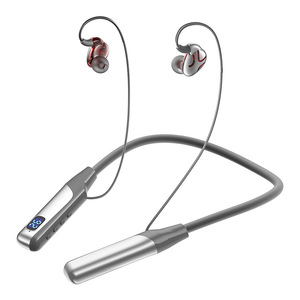
Bluetooth 5.3 chip set, 35-hour extended playtime, hybrid ANC (-30dB attenuation), ergonomic silicone neckband with handcrafted walnut acoustics chambers.
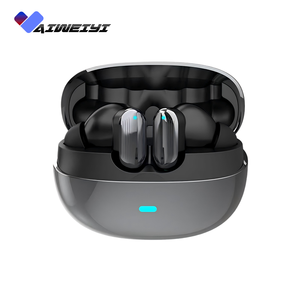
Custom logo engraving, 10mm composite dynamic driver, crystal-clear ENC mic arrays for voice calls, 36h total battery life with Type-C fast charge.
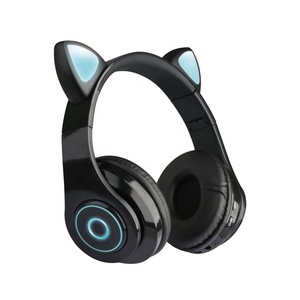
Active Noise Cancellation (ANC), ambient sound mode, volume-limiting hearing protection circuitry, customizable LED lighting profiles, IPX4 splash resistance.
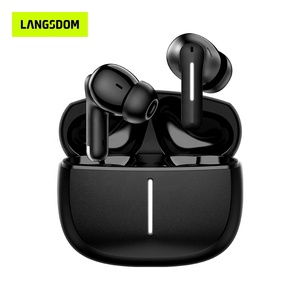
Low-latency gaming mode (45ms), customizable silk-screen branding, silicone ear hooks for high-intensity athletic stability, enhanced low-frequency response.
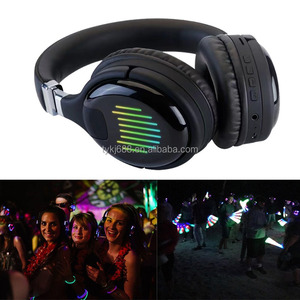
Multi-channel 863-915MHz RF system, multi-color LED visual sync, foldable headband architecture, ideal for festival venue operators & commercial rental audio fleets.
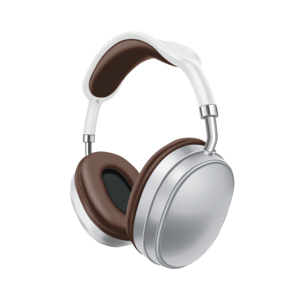
40mm titanium diaphragm transducers, Bluetooth 5.3 multipoint connectivity, memory-foam protein leather cushions, 50h playback for long-haul travel.
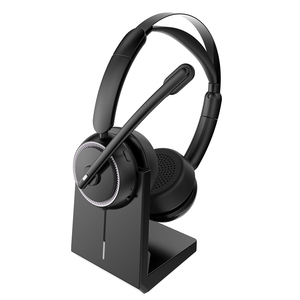
Designed for enterprise comms and remote workers; beamforming mic array, lossless audio codec support, pressure-relieving acoustic vent design.
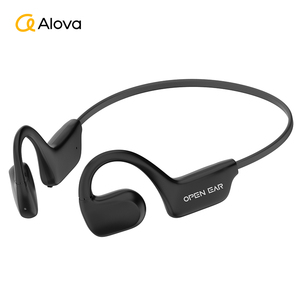
Directional sound field technology to eliminate sound leakage, situational awareness open-ear design, lightweight titanium memory alloy wire core.
In high-performance acoustic design, cabinet material selection fundamentally dictates harmonic distortion, resonance damping, and low-frequency clarity. Synthetic plastics like ABS and polycarbonate, while cost-effective for mass consumer electronics, suffer from high structural flexure and unwanted internal standing waves. This creates high Total Harmonic Distortion (THD) in the 200Hz to 2kHz vocal range.
Custom OEM wooden speaker factories utilize high-density timber substrates—such as solid North American Walnut, Natural Oak, Bamboo, and dense MDF (Medium-Density Fiberboard) covered with real wood veneers—because timber exhibits an optimal Young's Modulus-to-Density ratio. Natural wood fibers absorb internal cabinet acoustic reflections, converting excess vibrational energy into harmless micro-thermal energy. This structural damping yields a flat frequency response curve, allowing custom speaker drivers to reproduce audio with unmatched fidelity and zero cabinet coloration.
Acoustic Insight: The internal loss coefficient of high-density walnut ($ \eta \approx 0.015 - 0.022 $) is significantly superior to molded ABS ($ \eta \approx 0.005 $). This physics-backed property is why luxury audio brands choose precision-milled wooden cabinets over injection-molded plastics for flagship desktop, soundbar, and bookshelf audio lines.
| Material Type | Density Range ($kg/m^3$) | Resonance Damping Capacity | Acoustic Warmth & THD Control | OEM Customization Scope |
|---|---|---|---|---|
| Solid Black Walnut | 610 - 680 | Exceptionally High | Rich natural harmonics, THD < 0.3% | 5-Axis CNC Milling, Laser Etching, Oil Finish |
| High-Density Fiberboard (HDF + Veneer) | 750 - 880 | Maximum Structural Rigidity | Zero standing waves, linear bass response | Precision V-Grooving, PU Lacquer, Custom Colors |
| Sustainable Bamboo Composite | 700 - 850 | High Tensile Elasticity | Bright mid-range, punchy transient response | Eco-Friendly UV Curing, Carbonized Stain |
| Injection-Molded ABS Plastic | 1020 - 1050 | Low (Requires Internal Bracing) | Prone to cabinet vibration & mid-bass resonance | Requires expensive steel injection tooling molds |
Founded on Scandinavian acoustic principles originally pioneered in Stockholm and refined over a decade of worldwide market expansion, our OEM/ODM manufacturing enterprise bridges the gap between sleek aesthetic minimalism and heavy industrial export volume. We operate dedicated 45,000 m² production facilities equipped with multi-axis CNC routers, automated dust-free lacquering lines, and fully automated SMT (Surface Mount Technology) component placement systems.
100% of our timber is harvested from responsibly managed forests certified by the Forest Stewardship Council (FSC). We strictly follow CARB Phase 2 and EU Timber Regulations (EUTR) to guarantee full legal compliance for North American and European retailers.
Every wooden acoustic design undergoes extensive Sound Pressure Level (SPL), THD, and impedance curve verification inside our soundproof AP (Audio Precision) sound suites to guarantee consistent sound batch after batch.
From Qualcomm QCC chipsets supporting Bluetooth 5.4 LE Audio, LDAC, and aptX HD codecs to integrated Texas Instruments DSP amplifiers, our hardware division engineers high-performance mainboards in-house.
The global luxury consumer audio market is experiencing a massive structural shift. Modern buyers increasingly reject disposable, cheap plastic products in favor of architectural, bio-inspired interior products. Importers, brand owners, and procurement directors must align their product roadmaps with four critical industry trends:
Following our pioneering advancements in solar-powered personal audio (utilizing flexible Powerfoyle light-harvesting cells), the industry is now moving toward self-charging wooden outdoor speakers and smart home hubs. By integrating solar cells directly into the top timber panels of outdoor patio speakers, end users enjoy virtually unlimited playtime under natural sunlight and ambient indoor lighting. This eliminates charging cables and drastically reduces carbon footprints over the product lifecycle.
International freight routes cross drastic humidity zones—from humid Asian shipping ports to dry Nordic consumer homes. Advanced OEM wooden speaker exporters now employ automated industrial drying kilns that stabilize wood moisture content (MC) strictly between 8% and 11%. Combined with internal hydro-phobic nano-coatings and sealed IPX5/IPX6 silicone gaskets, contemporary wooden speakers can safely endure outdoor poolside rain, ocean air, and thermal fluctuations without cracking or swelling.
The transition to Bluetooth 5.4 LE Audio and Auracast™ broadcast capabilities empowers users to stream high-resolution audio to dozens of wooden speakers simultaneously throughout commercial spaces, hotels, or luxury homes. Furthermore, onboard DSP chips now feature active room-boundary compensation, automatically adjusting EQ parameters based on whether the wooden enclosure is placed near a wall, corner, or open room center.
Global retailers (such as major European and North American consumer electronics chains) demand rigorous Environmental, Social, and Governance (ESG) compliance. OEM suppliers must provide full transparency into timber harvesting locations, zero-VOC water-based finishes, recycled packaging materials, and ISO 14001 environmental management certification.
Our standard OEM minimum order quantity starts at 500 units per model for existing wooden enclosure molds with custom laser branding and custom retail packaging. For 100% custom-tooled acoustic cabinet dimensions, specialized CNC tooling, or unique wood species (e.g., Cherry, Teak, Ebony), our typical MOQ is 1,000 to 2,000 units depending on raw material sourcing parameters.
We utilize a rigorous multi-stage wood stabilization process. All incoming raw timber undergoes computerized vacuum kiln-drying to achieve a target moisture content of 8% to 11%. Furthermore, our internal enclosure structures feature cross-grain laminated corner bracing and internal moisture-barrier seals to ensure structural integrity across temperatures from -10°C to +50°C and humidity levels up to 95%.
Our factory operates under ISO 9001 quality management and BSCI social compliance standards. All finished audio products are manufactured to meet CE, RED (Radio Equipment Directive), FCC, RoHS, REACH, KC, TELEC, and California Proposition 65 requirements. Lithium-ion battery packs included in active models carry full UN38.3, MSDS, and IEC 62133 transport documentation.
Yes. Our senior acoustic engineering team in Stockholm and China provides comprehensive acoustic tuning services. We can adjust DSP parametric equalizer curves, target specific Harman curves or house acoustic profiles, and develop customized iOS and Android Bluetooth companion apps branded with your enterprise logo.
Rapid prototyping takes approximately 10 to 14 business days. Following final sample sign-off and deposit confirmation, standard mass production lead time is 35 to 45 calendar days. Accelerated 25-day production cycles are available for repeat re-orders using established timber stocks.