The global audio equipment market is undergoing a seismic technical transition. Driven by advances in high-resolution wireless codecs (LDAC, aptX Lossless, LC3 BLE Audio), micro-DSP active noise cancellation algorithms, and sustainable energy integration, the criteria for choosing a trusted studio headphones manufacturer and exporter have fundamentally evolved. Contemporary B2B buyers and brand owners require far more than basic assembly capabilities; they demand rigorous electroacoustic calibration, compliance with stringent international ESG directives, and turnkey OEM/ODM manufacturing agility.
“In modern electroacoustic manufacturing, Information Gain and audio fidelity stem from precise diaphragm damping control, seal-detection DSP logic, and tight tolerance manufacturing. A 0.5dB deviation across 20Hz–20kHz can differentiate a consumer-grade novelty from a studio reference transducer.”
— Stockholm Electroacoustic Research Group
1. Advanced Acoustic Transducer Engineering
At the core of any reference-grade studio headphone is its dynamic transducer assembly. Modern high-fidelity manufacturing utilizes ultra-thin (5µm to 12µm) multi-layered composite diaphragms coated with Beryllium, Titanium, or Graphene. These advanced material matrices eliminate cone breakup modes at high frequencies while maintaining exceptional transient speed across the bass register.
Furthermore, internal acoustic chamber design requires precise computational fluid dynamics (CFD) modeling. By placing anti-standing wave acoustic dampers and micro-venting ports behind the dynamic transducer, custom exporters can achieve flat frequency response curves (+/- 1.5dB from 20Hz to 20kHz), minimal phase alignment shift, and extremely low Total Harmonic Distortion (THD < 0.1% @ 1kHz, 94dB SPL).
| Transducer Architecture |
Frequency Response |
Acoustic Damping Material |
Primary Target Benchmark |
Ideal Procurement Application |
| Beryllium-Coated Dynamic (40mm) |
5 Hz – 40,000 Hz |
High-Density Acoustic Mesh |
Reference Master Studio |
Audio Engineering & Audiophile Brands |
| Graphene Composite TWS Driver (10mm) |
15 Hz – 24,000 Hz |
Synthetic Micro-Foam Dampers |
Wireless Hi-Fi & ANC Earbuds |
Mobile Executive & Commuter Lines |
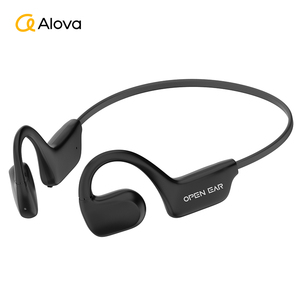
| Open-Ear Air Conduction Module |
50 Hz – 18,000 Hz |
Directional Sound Ports |
Situational Awareness Safety |
Sports, Fitness & Outdoor Activeware |
| RF Broadcast Phase-Locked Transducer |
30 Hz – 16,000 Hz |
Sealed Polymer Chamber |
500m Long-Range Transmission |
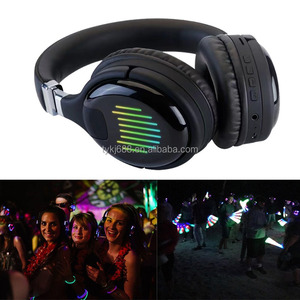
Silent Disco, Events & Tour Systems |
2. Active Noise Cancellation (ANC) & Micro-DSP Integration
Active Noise Cancellation has shifted from simple analog feed-forward loops to dynamic, self-adapting digital signal processing (DSP). Modern hybrid ANC systems utilize a dual-microphone setup: an outer feed-forward microphone to capture environmental sound before it strikes the ear canal, and an inner feedback microphone positioned near the speaker transducer to measure sound in real-time within the acoustic enclosure.
The internal micro-DSP samples ambient noise at rates exceeding 384 kHz, instantaneously calculating anti-noise phase-inverted waves. Advanced models incorporate real-time ear-tip seal compensation and atmospheric pressure leveling, maintaining up to 35dB to 42dB of low-frequency attenuation without introducing audible hiss, cabinet resonance, or acoustic fatigue.